
Kimi K3 Explained
China's New AI Model, and Why the Internet Is Talking About It
Introduction
You don't need to work in Silicon Valley to feel the ripple effects when a new AI model launches. When a cheaper, faster model comes out, it doesn't take long before developers and small businesses in Freetown, Lagos, or Accra feel it too, through lower prices, more tool choices, and sometimes better apps built on top of it.
This week, a Chinese company called Moonshot AI launched a new model called Kimi K3. It is already going viral at global tech markets and sparking debate about whether China is closing the gap with the biggest American AI labs, OpenAI and Anthropic. Here is what actually happened, for our African and beginner audience, and why it might matter to you.
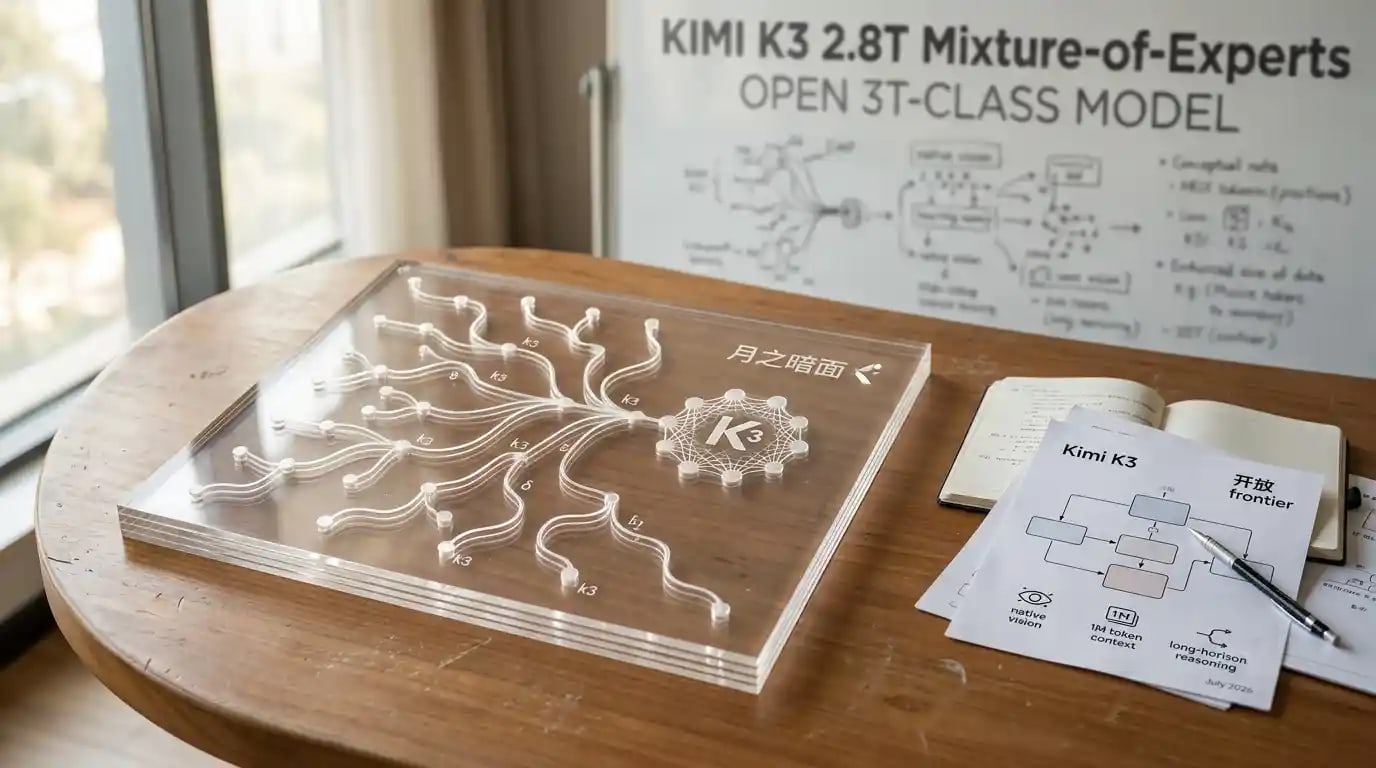
What Is Kimi K3
In plain terms, Kimi K3 is a new AI model, like the engine behind ChatGPT or Claude, built by a Beijing based startup called Moonshot AI. Here is what makes it stand out:
• Size: 2.8 trillion parameters. Parameters are like the number of small adjustable knobs inside a model's brain, more of them generally means more room to learn complex patterns. It uses a design called Mixture of Experts, which means it does not switch on its whole brain for every question, only the most relevant part turns on each time, which keeps it faster and cheaper to run
• Memory in one conversation: A 1 million token context window. Think of this as how much text it can hold in mind at once, roughly the length of several long novels put together
• Sees images natively: It can understand pictures directly, not just text, and early testing shows real strength in building website designs and visual layouts, with some early positive marks on 3D style generation too. These are very fresh results since the model only just launched, so treat them as early impressions, not settled fact
The Capability Claims, Read With Caution
Moonshot says its own tests show Kimi K3 beats Anthropic's Claude Opus 4.8 and OpenAI's GPT-5.5, but still falls short of the newest flagship models, Claude Fable 5 and OpenAI's GPT-5.6 Sol. That is Moonshot's own scorecard, not an outside referee's, so it is worth remembering a company grading its own homework tends to pick the tests it does well on.
Independent testers are only just starting to weigh in. Early results from Arena, a platform where real users compare AI answers blind and vote on which is better, ranked Kimi K3 ninth in the world for general text chat, but first for front end website coding tasks. Full open weights, which is what independent researchers need to test a model properly on their own terms, are not public yet. Moonshot has set July 27, 2026 as the release date for those. Until then, a good part of the independent testing simply has not happened.
The Number That Isn't in Question, Pricing especially for African low budget builders
Whatever you make of the benchmarks, the pricing is real and confirmed. Kimi K3 costs $3 per million input tokens and $15 per million output tokens through Moonshot's API.
• That output price is roughly half of what OpenAI charges for GPT-5.6 Sol, at $30 per million output tokens
• It is also well under a third of what Anthropic reportedly charges for Claude Fable 5, at $50 per million output tokens
In plain terms, tokens are the small chunks of text an AI model reads and writes, roughly a few letters or a short word each. Companies that build apps on top of AI models pay per token, so a cheaper price per million tokens can mean real savings for anyone building an AI powered product, including developers here in Sierra Leone and across Africa building their own local tools and services.
Open Weights, and Why That Matters
Kimi K3 is described as open weight, which means the actual trained model can be downloaded and run by anyone, on their own computer or server, instead of only through Moonshot's paid app or API. Picture the difference between buying a meal at a restaurant every time you are hungry, versus being handed the entire recipe book so you can cook it yourself, for free, whenever you want.
Full weights are due to be released publicly on July 27, 2026. Until then, K3 is only usable through Moonshot's own Kimi app, website, and API. For everyday beginners this detail matters less directly, but for developers and small tech businesses across Africa, open weight models like this one can eventually mean cheaper, more flexible AI tools that do not depend entirely on one foreign company's pricing decisions.
The Bigger Picture, Alibaba and a Distillation Dispute
Moonshot is backed by Alibaba, the Chinese e-commerce giant. That name matters right now because Anthropic recently accused Alibaba of running what it called the largest known distillation attack against Claude, alleging around 25,000 fake accounts sent roughly 28.8 million messages to Claude over about six weeks, in an effort to secretly copy its abilities.
In plain terms, distillation means asking a stronger AI model huge numbers of questions, recording its answers, then using those answers to train a separate, cheaper model to imitate it, without paying to build the original from scratch. Anthropic argues this lets a rival gain a model's abilities while skipping the safety training and guardrails built into the original.
This accusation is about Alibaba broadly, not proof of anything specific about Kimi K3. Worth knowing, though: Moonshot itself was named in an earlier, smaller version of this same kind of accusation back in February 2026, alongside two other Chinese labs, DeepSeek and MiniMax. Different story, same pattern worth keeping in mind.
Why Moonshot Needed a Win
This launch also lands at a pointed moment for Moonshot. Its Kimi app was once the third most used AI app in China by monthly users. After DeepSeek's low cost model took off in 2025, Moonshot slid all the way down to seventh place. Kimi K3, by several accounts, is Moonshot's biggest attempt yet to claw back that lost ground, timed to land just before a major Chinese AI conference in Shanghai.
Should Beginners in Africa Care About This
Most everyday users, someone chatting on a phone in Freetown or running a small shop's social media, will not touch Kimi K3 directly any time soon. It launches through its own app and API, not inside tools like ChatGPT, Gemini, or Claude that most beginners already use.
Where this actually matters is behind the scenes. If Kimi K3 holds up once independent testing catches up to the marketing, cheaper, genuinely competitive models like this tend to push prices down across the board over time, which is good news for anyone eventually paying for AI tools in Leones, Naira, or Cedis. It is a story worth watching, not a reason to change how you use AI today, especially with independent results still to come and the open weights not even public until July 27.
Frequently Asked Questions
What is Kimi K3?
Kimi K3 is a new AI model from the Chinese startup Moonshot AI, launched in July 2026. It is built to compete directly with American Ai models from OpenAI and Anthropic, and is priced far lower than most of them.
Who made Kimi K3?
Moonshot AI, a Beijing based startup backed partly by Alibaba. The company also makes the Kimi app and the Kimi Code coding tool.
Is Kimi K3 free to use?
Not exactly free, but very cheap by API pricing, at $3 per million input tokens and $15 per million output tokens. Full open weights, which let anyone download and run the model themselves at no ongoing cost, are due to be released publicly on July 27, 2026.
Is Kimi K3 really better than ChatGPT, Claude, and Gemini?
By Moonshot's own testing, it beats Claude Opus 4.8 and GPT-5.5 but still trails the newer Claude Fable 5 and GPT-5.6 Sol. Independent testers are only just starting to check these claims, so treat the full picture as unconfirmed for now.
What does open weights mean?
It means the trained model itself can be downloaded and run by anyone on their own computer or server, rather than only through the company's own paid app or API. This is different from closed models like most versions of ChatGPT and Claude, which you can only access through their makers' own apps.
Should I switch from ChatGPT or Claude to Kimi K3?
There is no need to rush. It launched only a few days ago, independent testing is still catching up, and the full open weights are not even public yet. For everyday chatting and writing tasks, the tools most beginners already use remain the simpler, more proven choice for now.
What is the Alibaba and Anthropic dispute about?
Separately from this launch, Anthropic recently accused Alibaba of running a large scale campaign to secretly copy Claude's abilities, using tens of thousands of fake accounts. Moonshot is backed by Alibaba, and was itself named in an earlier, similar accusation back in February 2026. It's a separate story from the Kimi K3 launch, but useful background for understanding the wider tension between Chinese and American AI companies right now.
Note: This is a fast moving story. Benchmarks, pricing, and rankings for models like this can change within days as independent testing matches up. Treat the details above as a takeaway from July 2026, and check current sources before relying on anything time sensitive.
#AInews #Kimi K3 #Moonshot AI #opensourceAI




Community Discussion
Loading comments...